The Evolution of Sound Mixing Techniques for Clearer Ensemble Dialogue in Dramatic Cinema
Rafael Koch · Oct 24, 2026
The Evolution of Sound Mixing Techniques for Clearer Ensemble Dialogue in Dramatic Cinema
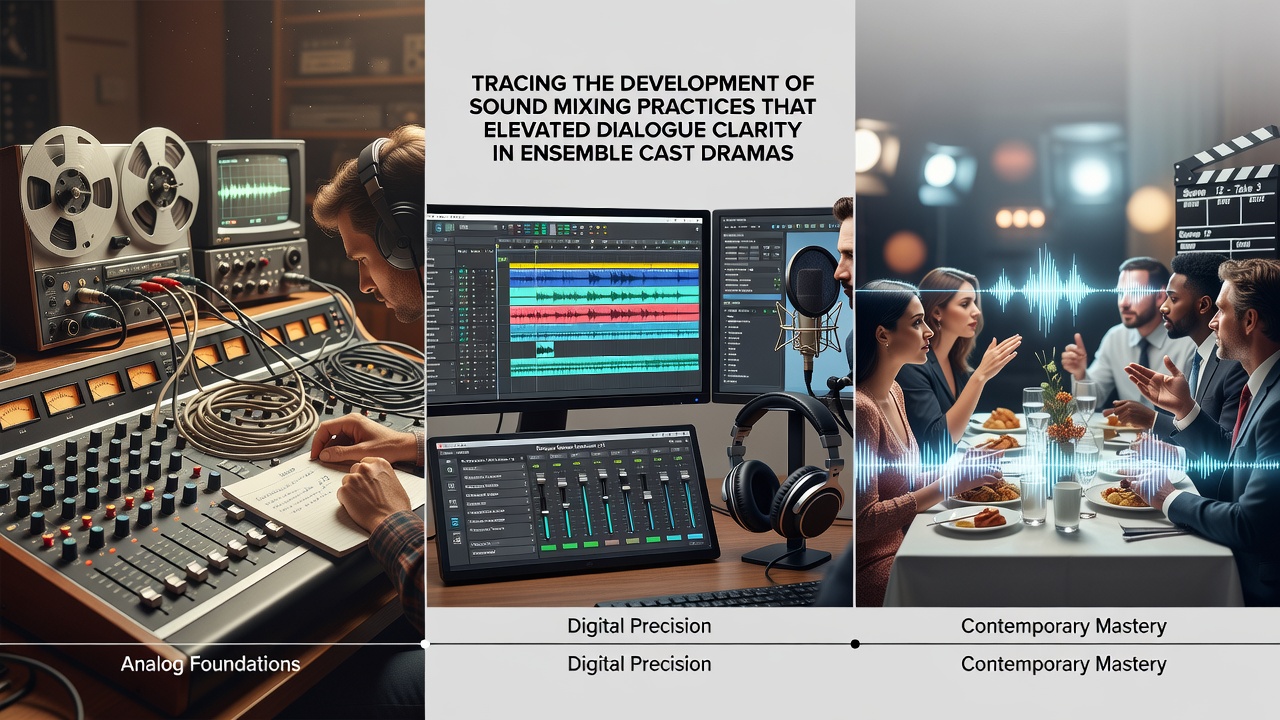
Sound mixing practices began evolving in the late 1920s as studios transitioned from silent films to synchronized audio, and engineers quickly recognized the challenges of balancing multiple voices within a single scene, while early systems relied on optical soundtracks that compressed dynamic range and limited separation between dialogue tracks.
By the 1930s studios introduced multi-microphone setups on sets, yet overlapping conversations in ensemble dramas often resulted in muddled audio because mixers had to record everything live onto one track, and this constraint pushed technicians to experiment with manual volume adjustments during playback sessions to emphasize key lines over background chatter.
Early Multi-Track Experiments in the Postwar Era
After World War II magnetic tape recording allowed separate tracks for dialogue, music, and effects, which gave mixers greater control in films featuring large casts, and directors like Robert Altman later exploited these capabilities to layer conversations without losing intelligibility, whereas previous mono mixes forced prioritization of single speakers at the expense of naturalistic group interactions.
Research from the Society of Motion Picture and Television Engineers documented how four-track magnetic systems improved signal-to-noise ratios by the 1950s, enabling clearer vocal placement in dramatic sequences where characters spoke simultaneously, and this technical foundation supported narrative styles that depended on auditory density rather than sequential delivery.
Introduction of Noise Reduction and Stereo Panning
Dolby A noise reduction arrived in the 1970s and reduced tape hiss that previously masked softer dialogue lines, while stereo panning techniques let engineers position voices across the soundstage to mimic real spatial relationships in crowded scenes, and films with ensemble structures benefited because audiences could distinguish individual speakers based on directional cues instead of relying solely on volume differences.
Those who studied these transitions note that panning combined with equalizers allowed selective frequency boosts around 2 to 5 kHz where human speech intelligibility peaks, and this approach became standard practice for dramas that featured rapid exchanges among multiple performers.
Digital Workstations and Automated Dialogue Replacement Refinements
Digital audio workstations entered postproduction facilities during the 1990s and replaced analog consoles with nondestructive editing tools, which meant mixers could isolate and process individual dialogue tracks from ensemble recordings without generational loss, while automated dialogue replacement sessions grew more precise through time-alignment algorithms that matched looped lines to original lip movements even when background noise complicated location captures.
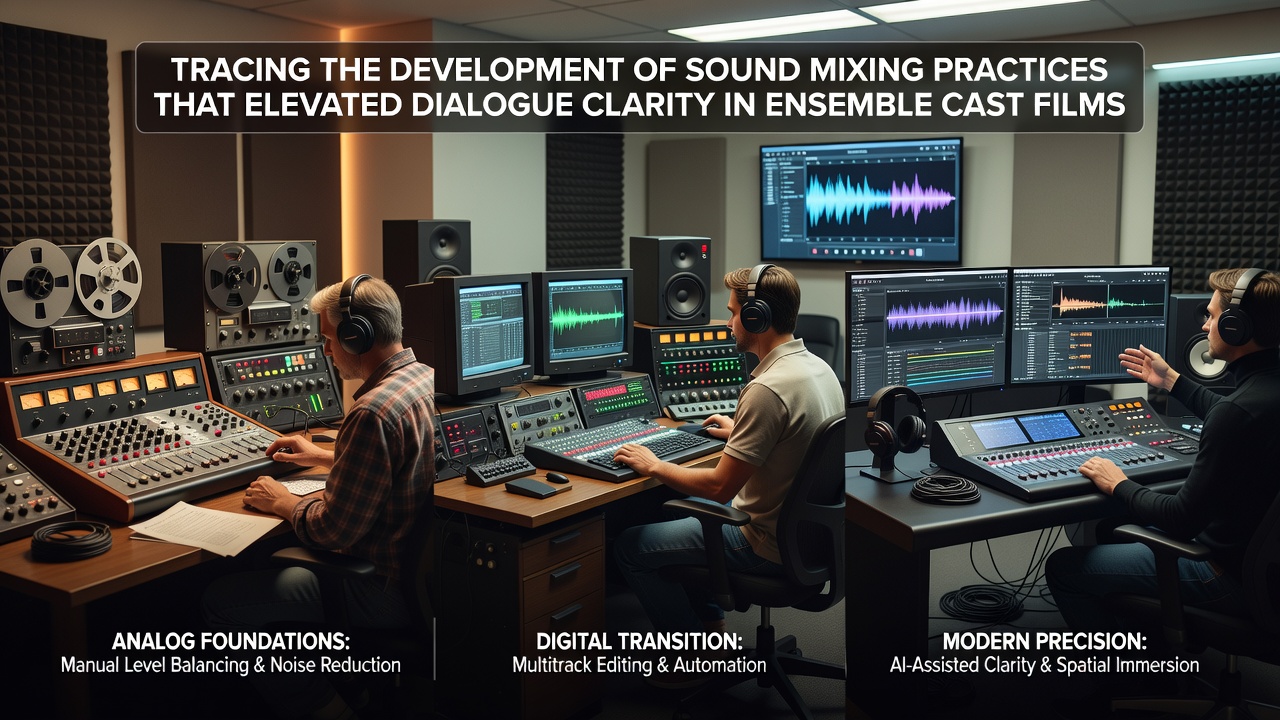
Studies conducted at institutions such as the University of Southern California School of Cinematic Arts examined how these tools reduced artifacts that once obscured consonants in group scenes, and data from industry reports indicate that by the early 2000s over 80 percent of dialogue in studio dramas underwent some form of digital cleanup before final mixing.
Contemporary Practices and Spatial Audio Integration
Object-based audio formats like Dolby Atmos extended spatial mixing possibilities in the 2010s, allowing individual dialogue elements to occupy distinct three-dimensional positions rather than fixed stereo channels, and this development proved especially useful for ensemble cast dramas where characters move through environments while speaking, because mixers could maintain clarity without forcing unnatural volume hierarchies.
Engineers now employ machine-learning tools that detect and attenuate competing frequencies in real time during premixes, and organizations including the European Film Academy have highlighted case studies where such methods preserved performance authenticity in large-cast productions filmed on practical locations.
Conclusion
Sound mixing for ensemble dialogue has progressed through incremental technical gains that addressed the inherent conflict between naturalistic performance and audience comprehension, and each stage built upon prior capabilities to support increasingly complex vocal arrangements without sacrificing dramatic intent. Current workflows integrate legacy principles of frequency management with advanced spatial tools, which continue to shape how group conversations register in contemporary dramas.